Single-Needle vs. Multi-Needle Embroidery Machines: Which Do You Need?
Single-needle or multi-needle embroidery machine? What each one does, when the extra needles pay off, and the home machines we would shortlist first.
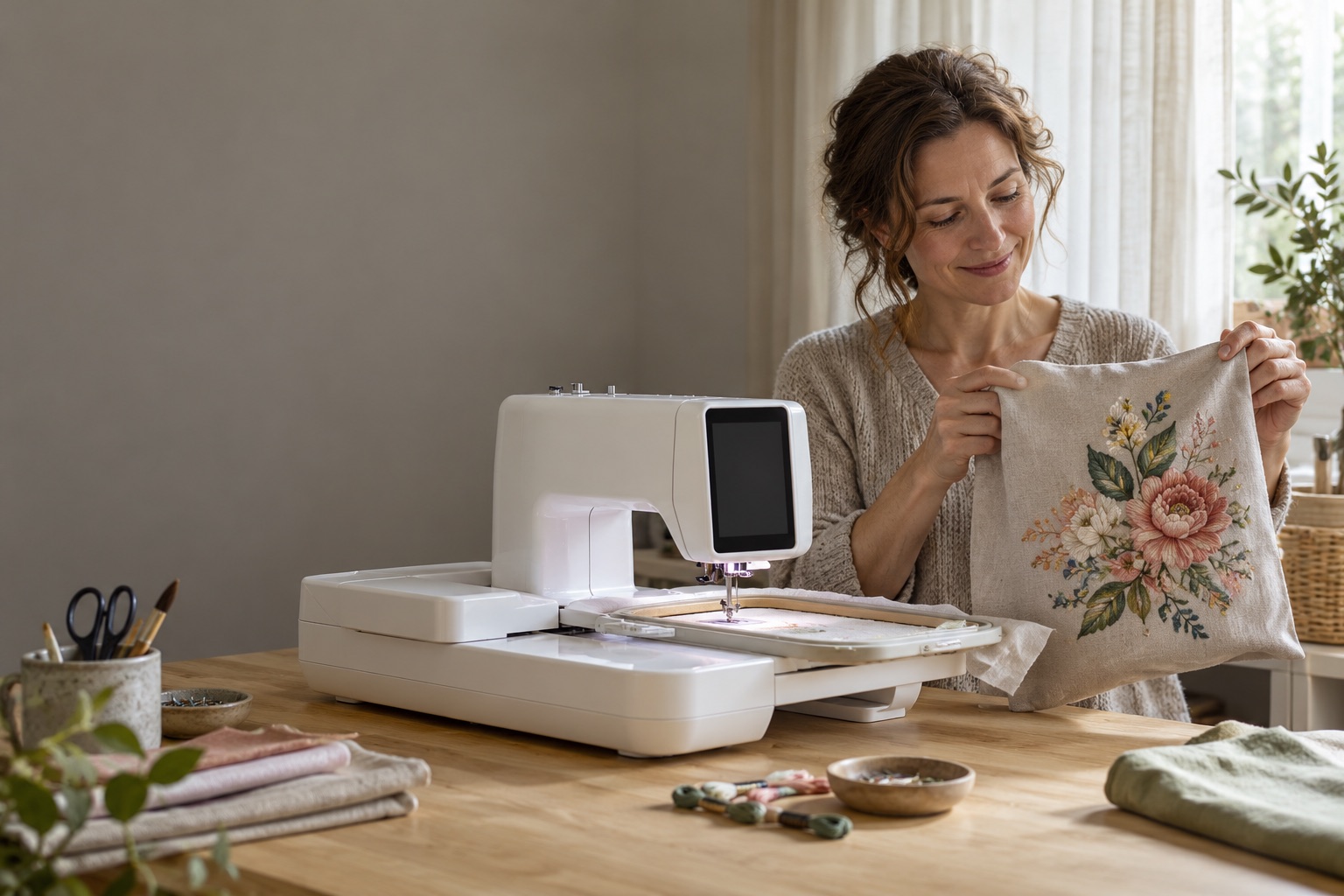
Six needles, ten, fifteen: once you start browsing, a multi-needle embroidery machine looks like the obvious upgrade. For most homes it isn't. Both kinds stitch the same designs. The multi-needle machine saves you the thread changes, and it charges a lot for that. Here is how to tell which side of the line you are on.
Affiliate disclosureAs an Amazon Associate we earn from qualifying purchases made through links on this page. Commissions never change our ratings.
The short answer
If you embroider for yourself, your family and the odd gift, buy a single-needle machine. Every home embroidery machine in our rankings is one, and that is no accident. They are smaller, usually cheaper and easier to learn, and many of them sew as well.
A multi-needle machine earns its place when embroidery turns into production: the same logo on twenty polo shirts, caps every week, a small shop with orders waiting. That is when the minutes you spend rethreading start to cost real money, and that is the problem a multi-needle machine solves. It doesn't stitch prettier designs. It stitches the same designs with fewer interruptions.
So ask yourself one honest question before you compare anything: are you buying for the projects you have, or for the business you might start one day? We'd buy for the first and upgrade once real orders prove the second.
What a single-needle embroidery machine does
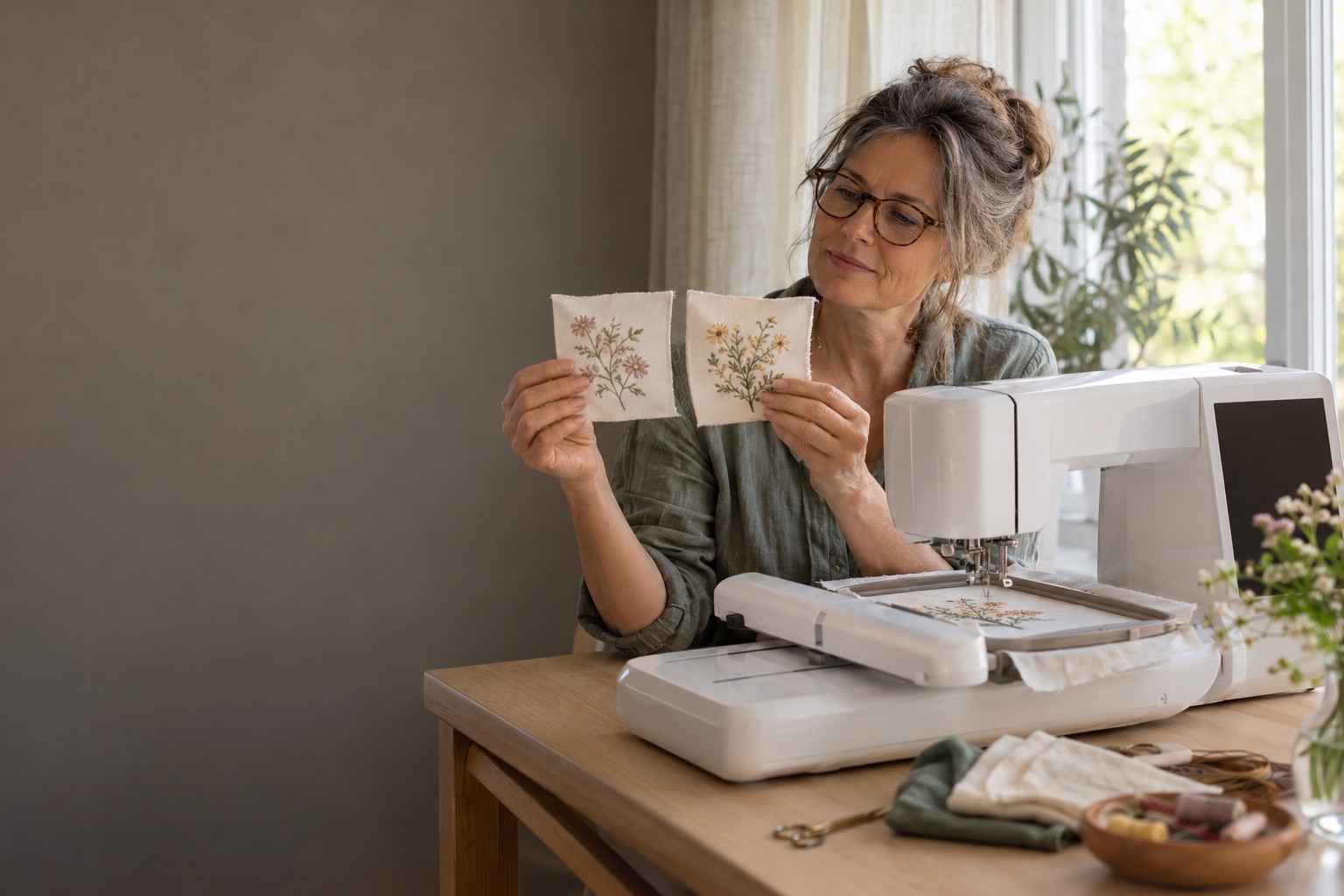
A single-needle machine holds one thread colour at a time. The design file tells it where each colour goes. When a colour block is done, the machine stops, the screen shows the next colour, and you swap the spool and rethread the needle. Then you press start again. A six-colour flower means five stops.
That sounds tedious, and on a big multi-colour design it can be. On the projects most people start with (a name on a towel, a monogram on a pillowcase, a small motif on a tote) it is a minute here and there, and after a few weeks a colour change becomes a quick routine.
What you get in return: a compact machine with a flat bed, a hoop that clicks onto the embroidery arm, and often a sewing side too. The Brother SE700 sews and embroiders in a 100 × 100 mm field. The Brother PE800 is embroidery only, with a 130 × 180 mm field and 138 built-in designs. Both sit on an ordinary table.
The field is the limit you'll hit first, long before the needle count. If a design is too big for the hoop, the number of needles makes no difference. Our 4x4 vs 5x7 guide and the design-fit calculator help you settle that before anything else.
What a multi-needle machine changes
A multi-needle machine carries several needles side by side on a moving head, each one threaded with its own colour from its own cone. Six, ten and fifteen needles are common counts, and Brother, for one, sells models with 6 and with 10 needles. You thread every colour once, tell the machine which needle holds which colour, and it switches between them by itself. The six-colour flower runs from start to finish without you.
Three other differences matter as much as the colour changes:
- Tubular hooping. Instead of a flat bed, the hoop sits on a narrow arm, so you can slide on a finished cap, a sleeve, a bag or a sewn shirt without stitching through the back. On a flat-bed home machine, finished items are fiddly and structured caps are mostly out.
- It only embroiders. No seams, no hems, no buttonholes. If you sew too, a multi-needle machine means a second machine.
- It is a bigger purchase in every sense. More weight, more table, more cones to keep in stock, and a bill well above most of the home machines on this site. Set-up help and a service address nearby matter more, because there is more to learn and more to maintain.
What it doesn't change is the rest of the craft. The design file, the stabilizer and the hooping still decide how the stitch-out looks. A badly digitized design puckers on fifteen needles exactly as it does on one; our puckering guide applies to both.
Colour changes: where the time really goes
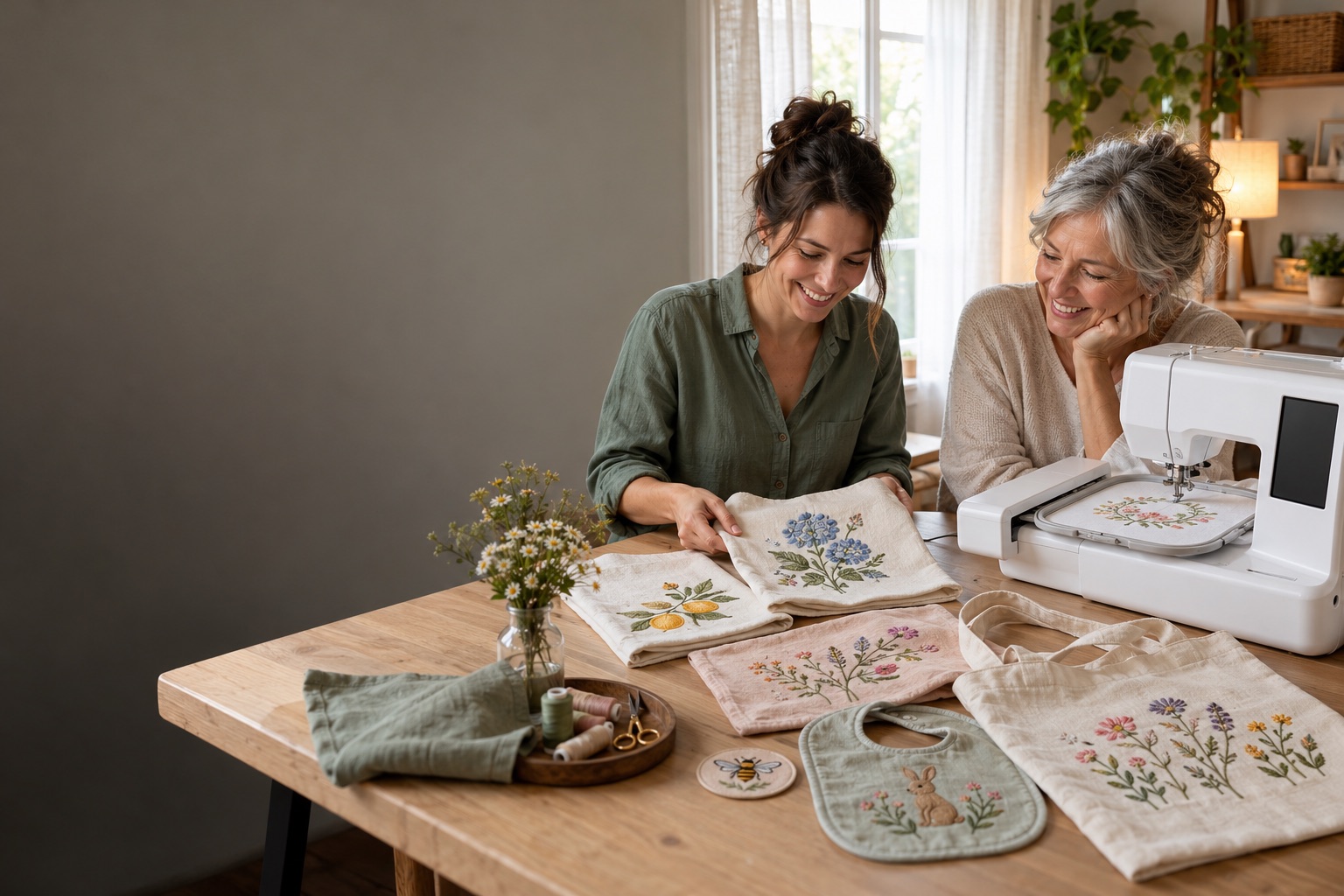
The most useful thing you can do is count. Take the designs you really plan to stitch in a normal month and add up the colour changes. A one-colour monogram has none. A three-colour logo has two. A detailed floral with eight colours has seven.
Now multiply by the number of pieces. One floral cushion means seven stops: no big deal, you were going to make tea anyway. The same floral on twelve tote bags for a craft fair means 84 stops. A three-colour team logo on 25 shirts means 50 stops, on top of hooping 25 shirts.
Notice that the hooping doesn't go away with more needles. Each piece still needs stabilizer, careful placement and a hoop. What a multi-needle machine removes is the waiting between colours, and that frees you to hoop the next shirt while the current one stitches. That overlap is where small shops find their speed.
If your monthly count stays in the dozens, a single-needle machine is fine. If it climbs into the hundreds and someone is paying for each piece, start pricing a multi-needle machine.
The middle path: a bigger single-needle field
Plenty of people look at multi-needle machines for the wrong reason: they want bigger designs. A bigger design doesn't need more needles. It needs a bigger hoop on a machine that can stitch the whole area in one go.
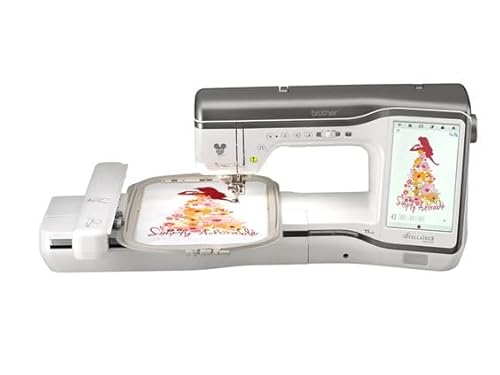
The Brother NQ1700E is the example in our catalogue: an embroidery-only, single-needle machine with a 6 × 10 inch class field stated by the maker, 258 built-in designs and wireless design transfer. We last recorded it at $2,299.99 on Nov 17, 2026, and that price may have changed, so it is not a casual buy either. Further up, the Brother Stellaire 2 Innov-is XJ2 lists a 360 × 240 mm field and sews as well.
A bigger field solves larger cushion panels, tote fronts and designs you'd otherwise split across two hoopings. It doesn't solve colour changes, and it doesn't hoop caps. Be clear about which of the two problems you have, and our hoop sizes guide will tell you what a field really allows.
When a multi-needle machine starts to make sense
We'd start pricing one when at least two of these are true for you:
- You sell embroidery, or you're about to, and you have real orders rather than a plan.
- You stitch the same design many times over: team shirts, school bags, staff uniforms.
- Caps, sleeves, finished bags and other already-sewn items are a regular request.
- Your designs routinely use six colours or more.
- You'd rather prepare the next piece than stand next to the machine.
Then think about the needle count. Six needles cover most logos and lettering. Ten or more let you leave your most-used colours threaded and still have spares for the job in front of you. More needles also mean more cones to buy and more threads to manage, so don't pay for fifteen if your designs rarely use five.
And talk to a dealer before you order. At this level, set-up help, training and local service are part of what you are buying. Ask what the warranty covers for home use and for business use, because the terms are not always the same.
Who should stay with a single needle (most of us)
A single-needle machine is the right buy if you're learning, stitching gifts and household linen, personalising things for your family, or mixing sewing and embroidery on one table. It's also a sound start if you might sell a little later. Begin on a home machine, upgrade when the orders justify it, and the home machine stays useful for one-offs and samples.
Here is what we'd shortlist, depending on what you need:
- Embroidery only, 5x7 field: the Brother PE800, 9.4/10 and the #1 of our 5x7 embroidery machine ranking, with 138 built-in designs and 4.6/5 from 2,700+ buyer reviews.
- Sewing and embroidery in one, 5x7 field: the Brother SE1900, 8.8/10, with 240 built-in sewing stitches and 4.7/5 from 1,600+ buyer reviews. The alternatives are in our sewing and embroidery combo ranking.
- A first machine on a budget: the Brother SE700, 9.3/10, which sews and embroiders in a 100 × 100 mm field and leads our best embroidery machines list.
None of these will ever change colours by itself. For a towel with a name on it, you won't miss it.
Five questions before you buy either
- What is the largest design you'll stitch in one hooping? That decides the field, and the field narrows the list faster than anything else.
- How many colour changes do you do in a month? Count them on real designs, not on wishes.
- Do you need to sew too? Then a combo, or a single-needle embroidery machine next to the sewing machine you already have.
- Will you stitch finished items or caps? If often, that is a real point for the tubular arm of a multi-needle machine.
- What is the whole budget? Stabilizer, thread, needles and designs come on top of the machine. Our guide to the real cost of starting lays it out.
Still torn between an embroidery-only machine and a combo? Our embroidery machine vs sewing machine guide sorts that out next.
Our rated picks
The three best-rated models of our best 5x7 embroidery machines ranking, from buyer reviews and the listed specs.


Product images: Amazon listings
Frequently asked questions
What is a single-needle embroidery machine?
A machine that stitches with one needle and one thread colour at a time. It stops at each colour change so you can rethread, then carries on. Almost every home embroidery machine works this way, including every machine in our rankings.
Is a multi-needle embroidery machine better?
It is faster on multi-colour and repeat work, and it can hoop caps and finished items on its tubular arm. It does not stitch better: the design file, the stabilizer and the hooping decide that. For gifts and household projects, a single-needle machine does the same job for less money.
What is the best multi-needle embroidery machine for beginners?
Most beginners are better served by a single-needle machine first. If you already have orders to fill, look for dealer training and local service, a needle count that covers your usual designs (six is often enough), a cap frame if you will stitch caps, and clear warranty terms for business use.
How many needles do I need?
One for home projects. If you go multi-needle, count the colours in your usual designs: six needles cover most logos and lettering, while ten or more let you leave your favourite colours threaded.
Can a multi-needle embroidery machine sew?
No. It only embroiders. For seams, hems or buttonholes you still need a sewing machine or a sewing and embroidery combo.
Which single-needle embroidery machine is best?
In our rankings, the Brother PE800 leads the 5x7 machines at 9.4/10 and the Brother SE700 leads our best embroidery machines list at 9.3/10. Choose by field size first, then by whether you also want to sew.
Sources and further reading
- Brother PE800 (exact listing), read our review
- Brother SE1900 (exact listing), read our review
- Brother SE700 (exact listing), read our review
- Brother NQ1700E (exact listing), read our review